Why Is Gold Falling Despite Weak US Jobs Data & a Potential October Pause?
 by Michalis Efthymiou - October 07, 2026
Gold is failing to gain bullish momentum, despite the Federal Reserve’s next move is likely being a pause. Last week’s Non-Farm Payrolls figure and the broader employment picture were weaker than expected. Traditionally, the weaker data would result in lower rate-hike expectations, a weaker US Dollar, and an upward trend in Gold. However, the market reaction was very different. Here, we will explore the reasons behind this response.
US Employment Data & Market Reaction
In October, four key employment figures gained market attention: JOLTS job openings, non-farm payrolls, average hourly earnings and the US unemployment rate.
- JOLTS job openings - 7.08 million vs 7.23 million expected (weaker than expected)
- Non-farm payrolls - 29,000 VS 89,000 expected (weaker than previous predictions)
- Average hourly earnings - 0.1% VS 0.3% expected (weaker than previous predictions)
- US unemployment rate - 4.2% VS 4.2% million expected (weaker than previous predictions)
The latest US employment figures do not indicate a deterioration, but they point to a clear cooling. The employment sector remains resilient and is not necessarily pressuring the Fed to adopt a more supportive monetary policy. However, the figures are clearly coming under pressure from high inflation and geopolitical issues, which may prompt the Fed to take a stronger stance.
Due to the above figures, the market now expects the Federal Reserve to pause in October and delay a rate hike until December. This would traditionally support Gold, but investors believe that the overall longer-term picture remains unchanged. For this reason, Gold remains under pressure.
The Stronger Dollar and Yields
One of the primary reasons Gold is struggling is the stronger US Dollar and higher bond yields. The Federal Reserve can influence short-term yields, but longer-term yields are driven by inflation, fiscal policy, and investor sentiment. For this reason, weaker employment data, combined with expectations of an October pause, is providing little support for Gold, as the longer-term yields continue to rise.
Markets continue to believe that inflation will remain above 2% for years to come and that governments around the world will struggle to bring their budgets under control. Traders are also still expecting the Fed to keep hiking, despite a potential pause in October. In addition, markets also expect the geopolitical tensions to worsen after the US midterm elections.
These developments are increasing investor demand for the US Dollar. The US Dollar Index is currently trading 0.45% higher and recently rose to a 78-week high. The currency has also recently overtaken the Australian Dollar as the best-performing currency of 2026. The Dollar is also finding support from the weakness in the Euro and Japanese Yen. The Euro is coming under pressure from domestic budget disagreements, while the Yen is under pressure from dovish monetary policy. While the US Dollar continues to rise, further weakness in Gold prices remains possible.
Pressure on Gold Remains
by Michalis Efthymiou - October 07, 2026
Gold is failing to gain bullish momentum, despite the Federal Reserve’s next move is likely being a pause. Last week’s Non-Farm Payrolls figure and the broader employment picture were weaker than expected. Traditionally, the weaker data would result in lower rate-hike expectations, a weaker US Dollar, and an upward trend in Gold. However, the market reaction was very different. Here, we will explore the reasons behind this response.
US Employment Data & Market Reaction
In October, four key employment figures gained market attention: JOLTS job openings, non-farm payrolls, average hourly earnings and the US unemployment rate.
- JOLTS job openings - 7.08 million vs 7.23 million expected (weaker than expected)
- Non-farm payrolls - 29,000 VS 89,000 expected (weaker than previous predictions)
- Average hourly earnings - 0.1% VS 0.3% expected (weaker than previous predictions)
- US unemployment rate - 4.2% VS 4.2% million expected (weaker than previous predictions)
The latest US employment figures do not indicate a deterioration, but they point to a clear cooling. The employment sector remains resilient and is not necessarily pressuring the Fed to adopt a more supportive monetary policy. However, the figures are clearly coming under pressure from high inflation and geopolitical issues, which may prompt the Fed to take a stronger stance.
Due to the above figures, the market now expects the Federal Reserve to pause in October and delay a rate hike until December. This would traditionally support Gold, but investors believe that the overall longer-term picture remains unchanged. For this reason, Gold remains under pressure.
The Stronger Dollar and Yields
One of the primary reasons Gold is struggling is the stronger US Dollar and higher bond yields. The Federal Reserve can influence short-term yields, but longer-term yields are driven by inflation, fiscal policy, and investor sentiment. For this reason, weaker employment data, combined with expectations of an October pause, is providing little support for Gold, as the longer-term yields continue to rise.
Markets continue to believe that inflation will remain above 2% for years to come and that governments around the world will struggle to bring their budgets under control. Traders are also still expecting the Fed to keep hiking, despite a potential pause in October. In addition, markets also expect the geopolitical tensions to worsen after the US midterm elections.
These developments are increasing investor demand for the US Dollar. The US Dollar Index is currently trading 0.45% higher and recently rose to a 78-week high. The currency has also recently overtaken the Australian Dollar as the best-performing currency of 2026. The Dollar is also finding support from the weakness in the Euro and Japanese Yen. The Euro is coming under pressure from domestic budget disagreements, while the Yen is under pressure from dovish monetary policy. While the US Dollar continues to rise, further weakness in Gold prices remains possible.
Pressure on Gold Remains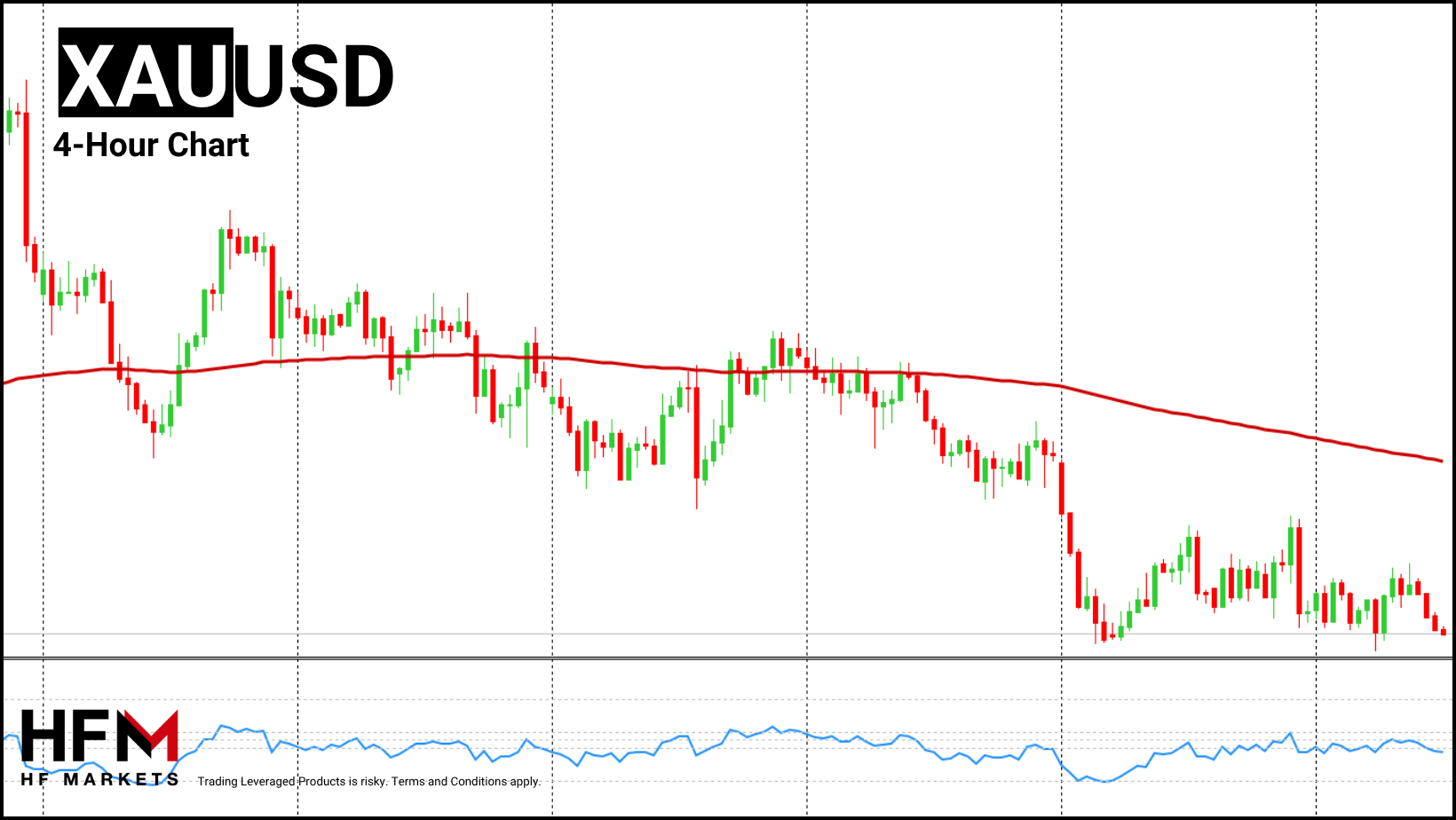 We can see from the above that despite weaker employment data and expectations of an October pause, Gold continues to decline. The key reasons for the weakness are higher bond yields, a stronger Dollar, and expectations for future rate hikes.
In terms of price analysis, Gold remains under short-term bearish pressure after failing to sustain Tuesday’s recovery towards the $4,180.00 area. The price has slipped back towards $4,130, with the stronger US dollar and persistently elevated Treasury yields limiting upside momentum. Technically, $4,110.00 is the key immediate support zone. A convincing break below this area could expose $4,050, followed by the psychologically important $4,000 level.
Currently, Gold’s price is trading below all moving averages and the day’s VWAP. At the same time, the price is trading comfortably in the RSI’s sell-zone while avoiding the oversold area for now. However, if the price rises above $4,148 in the short term or $4,170.00 in the medium term, sell signals could be erased.
Tonight’s FOMC meeting minutes are likely to trigger high volatility for the US Dollar and, as a result, also impact Gold. The more hawkish the Fed’s meeting minutes sound, the more they may pressure Gold. In addition to the meeting minutes, FOMC member Mr Waller, will also speak tomorrow morning at an Istanbul economic forum. These will be the first comments from a Fed member following the weak employment data and the release of the Fed’s meeting minutes.
Key Takeaways:
- Weak US employment data points to an October Fed pause, but not a dovish shift.
- Higher Treasury yields are keeping pressure on Gold despite softer labour data.
- A stronger US Dollar is adding further downside pressure to Gold prices.
- Gold remains technically bearish, with $4,110 as key support and 4,148–4,170 as resistance.
- The FOMC minutes and Waller’s comments could trigger the next major move in Gold.
We can see from the above that despite weaker employment data and expectations of an October pause, Gold continues to decline. The key reasons for the weakness are higher bond yields, a stronger Dollar, and expectations for future rate hikes.
In terms of price analysis, Gold remains under short-term bearish pressure after failing to sustain Tuesday’s recovery towards the $4,180.00 area. The price has slipped back towards $4,130, with the stronger US dollar and persistently elevated Treasury yields limiting upside momentum. Technically, $4,110.00 is the key immediate support zone. A convincing break below this area could expose $4,050, followed by the psychologically important $4,000 level.
Currently, Gold’s price is trading below all moving averages and the day’s VWAP. At the same time, the price is trading comfortably in the RSI’s sell-zone while avoiding the oversold area for now. However, if the price rises above $4,148 in the short term or $4,170.00 in the medium term, sell signals could be erased.
Tonight’s FOMC meeting minutes are likely to trigger high volatility for the US Dollar and, as a result, also impact Gold. The more hawkish the Fed’s meeting minutes sound, the more they may pressure Gold. In addition to the meeting minutes, FOMC member Mr Waller, will also speak tomorrow morning at an Istanbul economic forum. These will be the first comments from a Fed member following the weak employment data and the release of the Fed’s meeting minutes.
Key Takeaways:
- Weak US employment data points to an October Fed pause, but not a dovish shift.
- Higher Treasury yields are keeping pressure on Gold despite softer labour data.
- A stronger US Dollar is adding further downside pressure to Gold prices.
- Gold remains technically bearish, with $4,110 as key support and 4,148–4,170 as resistance.
- The FOMC minutes and Waller’s comments could trigger the next major move in Gold.Publication date:
2026-10-07 10:47:33 (GMT)